

LFP Battery or Lithium Iron Phosphate Battery
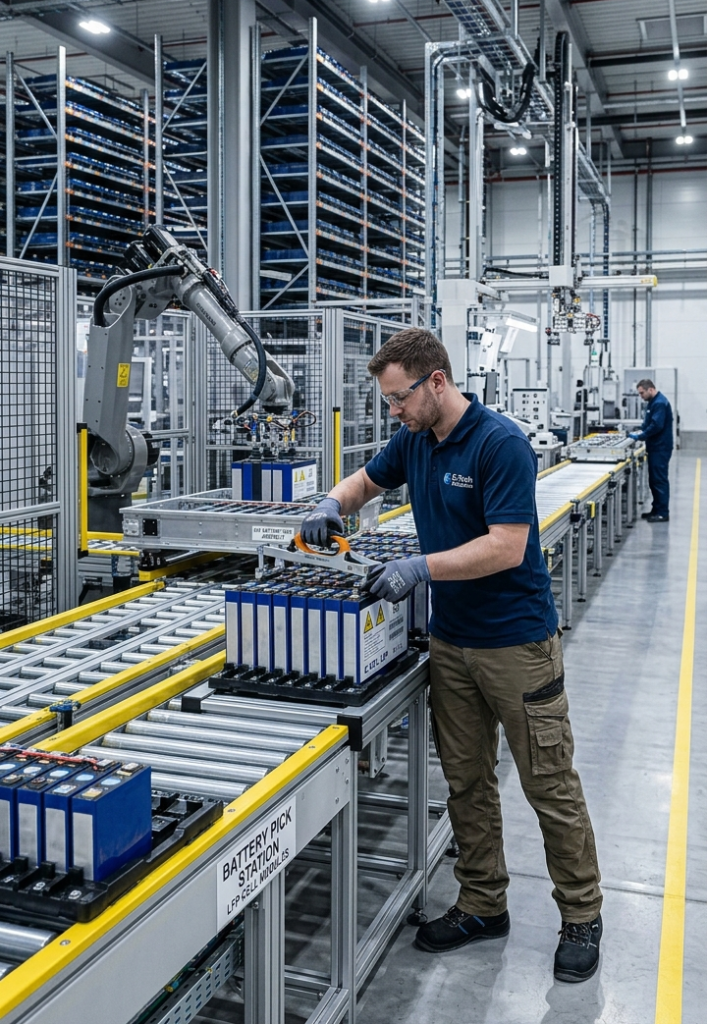
A rechargeable battery from the lithium-ion family, widely adopted for its high safety, long service life, and cost efficiency.
These batteries are recognized as a more sustainable and environmentally responsible option.
Key Features and Benefits of LFP Batteries
Very High Safety
The stable phosphate-cathode structure makes these batteries more resistant to high temperatures, puncture, and impact. Compared with conventional lithium-ion batteries, they are less prone to fire.
Long Cycle Life
These batteries typically support more than 2,000 to 5,000 charge and discharge cycles (at 80% depth of discharge
), far exceeding the cycle life of lead-acid batteries.
Cost-Effective
Chargeable to 100%
Applications of Lithium Iron Phosphate Batteries
Electric Forklifts
Many electric vehicles and material-handling systems in factories and industrial facilities use LFP batteries to reduce operating costs. Electric forklifts are also widely used in industries where clean production environments are important because they do not create local exhaust pollution.
Solar Energy Storage and Power-Wall Systems
Their long service life makes them highly suitable for solar systems and backup power (UPS). These batteries can work alongside solar arrays, diesel generators, and the utility grid to greatly improve power continuity. Five- and ten-kilowatt packages are increasingly used around the world.
Industrial and Telecommunications Equipment
One of the most valuable applications ofLFP batteries is replacing other battery technologies in telecommunications systems and transmission towers, enabling more continuous service with significantly fewer failures.